
Claresholm to the national stage: Heath’s journey of faith, community, calling
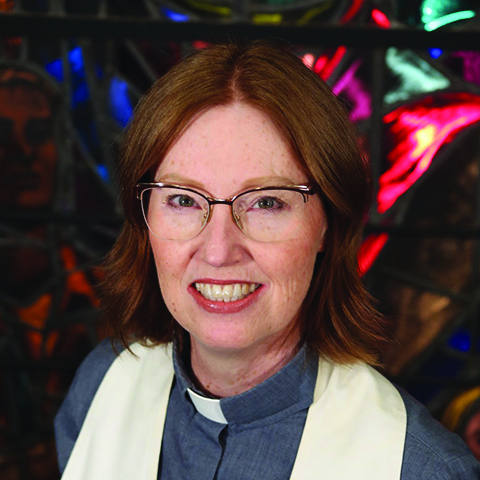
national leader - Reverend Kim Heath, who got her start in Claresholm, is the Moderator for the United Church of Canada. She paid a visit back to Claresholm on July 5. Photo submitted
By David Gale
When Kimberly Heath first arrived in Claresholm in 1999, it wasn’t part of a carefully plotted career move, it was, as she describes it, the result of a phone call, a prayer, and a decision made in a matter of minutes.
At the time, she was a newly ordained minister with the United Church of Canada, living in Toronto and expecting to be posted almost anywhere except Alberta. Her mom, she recalls, had even mentioned that Alberta was off-limits but ministry, as Heath quickly learned, has a way of rewriting expectations.
“We got a call and they asked if I was sitting down,” she said. “They told us we were going to Alberta. We had about 10 minutes to decide.”
Those 10 minutes would change the trajectory of her life and quietly place Claresholm on the map of a journey that would eventually lead to one of the highest leadership roles in Canadian church life.
Cue divine intervention, as it was her mom who called, within minutes of the position being offered, to let her daughter know that if the church decided she needed to go to Alberta, she would happily support the move. That sealed the deal.
Heath had studied theology in Toronto at Theological Education at Emmanuel College, preparing for ministry in the United Church tradition. She had recently become a mother and was navigating the early demands of both parenting and ordination.
The decision to accept the Alberta posting came with a mix of uncertainty and faith. Within weeks, she, her husband, and their one-year-old daughter were on a plane bound for Southern Alberta.
“When we landed, it was a heat wave in Ontario and the pilot told us it was four degrees in Calgary,” she recalled. “The whole plane just went quiet. We thought, what are we doing?”
Their destination was a two-point pastoral charge: Claresholm and nearby Stavely.
For Heath, Claresholm was where ministry became real in ways no classroom could fully prepare her for. Sunday sermons and worship planning were only part of the work. The deeper responsibility, she said, was being present in the most meaningful, and often most difficult, moments of people’s lives.
“It’s everything from baptisms and weddings to people’s personal tragedies,” she said. “Funerals, sudden deaths, families dealing with loss you can’t imagine. You just show up.”
She remembers leading large community funerals, including one for a local newspaper editor who died suddenly, drawing hundreds of mourners from across the region. In those moments, she said, her role was less about having answers and more about holding space for grief.
“You step into these incredibly painful times and you just have to be there,” she said. “Even when you don’t have the right words.”
At just 27 years old, Heath also carried the weight of being the first female minister in her charge. In a small community where roles and relationships are deeply intertwined, that visibility mattered.
“In the grocery store, people would say, ‘there’s the lady minister,’” she said with a laugh. “It was new for them, but it was also a really meaningful time.”
Heath credits much of her grounding to her upbringing as the daughter of a United Church minister, as well as to her own lived experience in tight-knit rural communities.
In smaller towns, she said, ministry is not confined to the pulpit.
“It’s all relationship,” she said. “You can have an average sermon, but if you love the people and are present in their lives, that’s what matters most.”
Her approach to leadership was also shaped by her family life and faith practice. Her husband supported her through early ministry years, and she leaned heavily on prayer, scripture, and what she calls “simply showing up.”
After her time in Claresholm and Stavely, Heath’s ministry took her to Calgary and later to Brockville, Ontario, where she served for nearly two decades at Wall Street United Church.
In 2025, she was elected Moderator of the United Church of Canada, the denomination’s highest elected position and spiritual leadership role. The term is three years.
The role, she explains, is both symbolic and practical. It includes chairing major national meetings, guiding governance processes, and serving as a public representative of the church across Canada.
“I often describe it as being a little bit like the Pope,” she said with a smile, noting the difference is the position is elected and time-limited. “It’s the spiritual head of the church, but for a set term.”
Now based in Brockville, Ontario, she travels extensively, meeting with congregations, ecumenical partners, and national organizations.
From presenting contributions to reconciliation initiatives in Winnipeg to engaging with global partners, the role has expanded her ministry from a single congregation to a national stage.
Heath admits she did not always see herself in such a role. The idea, she said, emerged gradually over time through conversations, encouragement from colleagues, and what she describes as a sense of “call.”
“There were people who would say, ‘you should think about letting your name stand,’” she said. “At first it feels like a seed drifting in. Then one day you realize it has taken root.”
Eventually, she made the decision to enter the election process with an openness to whatever outcome followed.
“You step into it lightly,” she said. “You don’t hold it too tightly, because you don’t want to miss what you’re being called to do.”
She believes modern faith communities, including the United Church, must adapt to changing times, including declining attendance and shifting cultural engagement. But she rejects the idea that smaller necessarily means less meaningful.
“God calls us to be faithful, not successful,” she said. “Sometimes small is exactly where the most important work happens.”
She points to the strengths of small towns: where people know each other deeply, where quirks are accepted, and where community is unavoidable.
“There’s something powerful about that level of connection,” she said. “The world could use more of it.”
As she continues her three-year term, Heath is focused on helping the church navigate change, rethinking how worship, community, and connection happen in a digital and increasingly fragmented world.
That includes exploring new forms of ministry, from smaller house gatherings to expanded online engagement, while staying rooted in the core message she believes underpins it all: love of God and love of thy neighbour.
Before the interview ends, she mentions one more thing with a hint of humour, her vehicle of choice for national leadership travel.
“I’ve got a 2013 Toyota Sienna,” she said. “It’s basically a tank. Over 300,000 kilometres.”
It’s a small detail, but fitting for someone whose journey from Claresholm to national leadership has been less about grandeur and more about endurance, service, and staying on the road long enough to follow where the calling leads.
Despite her national role, Heath often returns to themes learned in places such as Claresholm: community, humility, and connection.