Speaker talks about vegetable garden planning
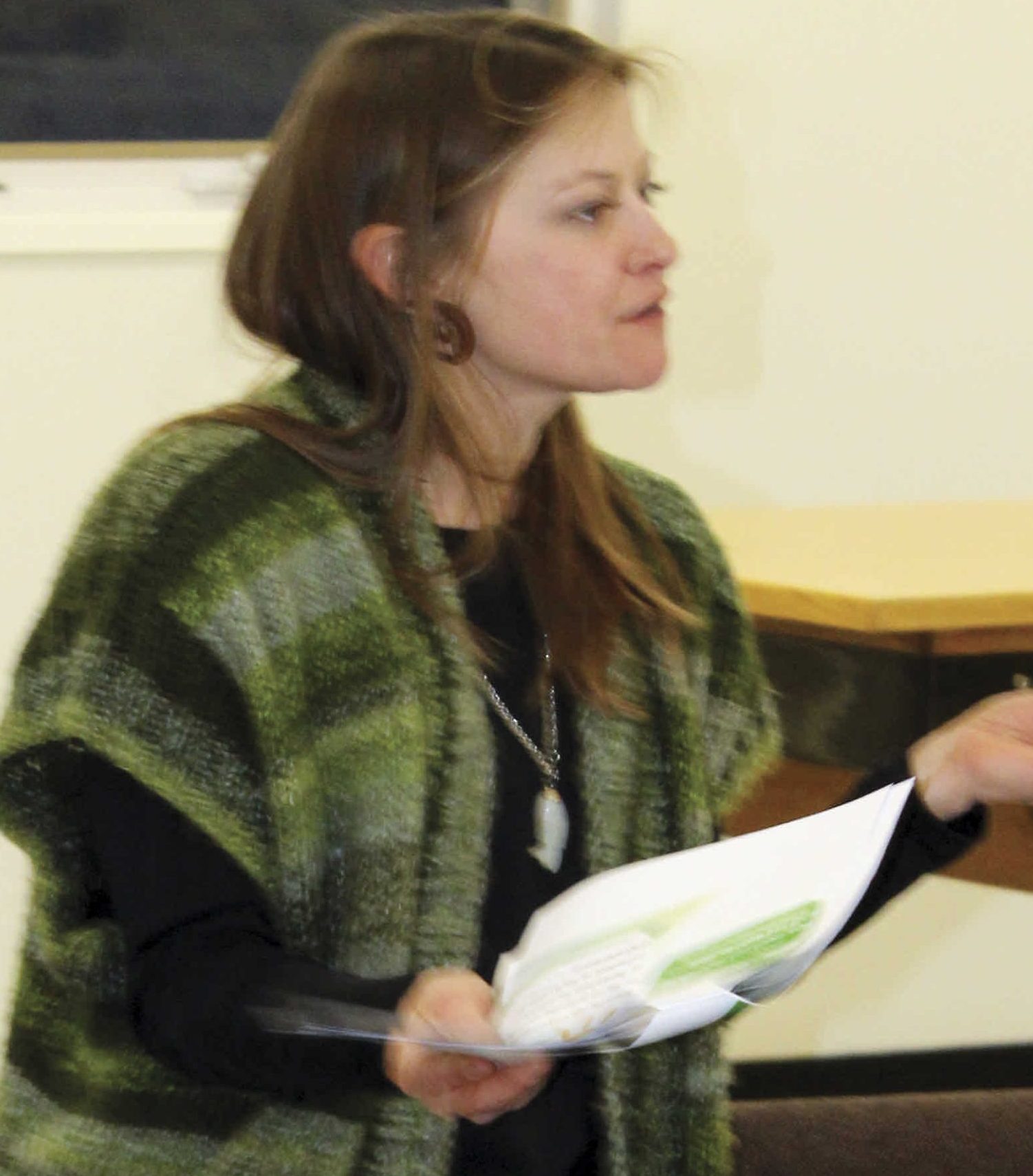
plan your veggies - Natasha Kenworthy, of Chickadee Gardens, was one of the guest speakers at a garden information series put on at the Claresholm Social Centre on Tuesday, March 24. She discussed planning a vegetable garden. Photo by Rob Vogt
By Rob Vogt
Planning a vegetable garden has a lot of different parts.
Natasha Kenworthy, of Chickadee Gardens, discussed vegetable garden planning at a garden information series put on at the Claresholm Social Centre on Tuesday, March 24.
About 20 people turned out to hear Kenworthy cover a wide range of things top consider.
She started with the amount of sun.
Full sun is six or more hours of direct sun; part sun is four to six hours; and shade is four or fewer hours.
Where the suns hits the garden during the day will determine where you plant. For example, some plants like shade more.
Soil is also important. In boxes or containers, soil is warmer and dryer; while in the ground it is cooler, and more moist.
Planting should occur when the temperature is a minimum five degrees Celsius; and drainage should be like a damp sponge.
Soil can be made up of sand, clay, loam, organic matter, compost, manure, air and microbes.
Kenworthy suggested to amend soil as needed, that is to add compost or manure.
She turned her attention to water.
When planning a vegetable garden it is important to plan access to water, whether by hose, sprinkler, watering from a can or some other means.
Kenworthy encouraged everyone to ask themselves what are they planting? Are they gardening to feed a family for a year, or for fun?
Is it just for snacks; produce that will actually be eaten; or produce that will be preserved and stored?
Another consideration is space.
That could mean going vertical with a trellis, or staking and hanging plants.
One option is interplanting where quick-harvest vegetables are planted in between long-harvest vegetables.
Successive planting is having multiple sowings of the same crop, such as planting lettuce weekly.
Companion planting is putting in plants that grow well together and support one another.
An example is three sisters, which are corn, beans and squash, that provides support and shading.
Another example is tomatoes and basil, where the basil repels aphids and shades the soil.
A third example is onions and carrots, with the onions deterring root fly.
A final example is lettuce and carrots, which don’t compete for resources.
Square-foot gardening is another option, where the grower sees how much they can plant in a square foot.
Kenworthy concluded by outlining various types of gardens.
Common types of gardens include raised beds; container gardening; in ground planting, such as planting in rows or a square foot; and vertical planting.
Alternative types of gardens include hugelkultur; straw bale gardening; kitchen garden; and community garden.